In 2026, professional in home ultrasound in Scottsdale has become a premier medical service, allowing residents in the Phoenix area to receive hospital-grade imaging in the comfort of their own residences. Powered by “Ultrasound-on-Chip” technology and integrated artificial intelligence (AI), these portable systems provide a diagnostic accuracy rate of up to 94.2%, while costing 60–70% less than a traditional in-clinic MRI. For Arizona seniors, this model provides a vital tool for the early detection of cardiovascular issues and the management of chronic conditions without the stress and infection risks of hospital visits.
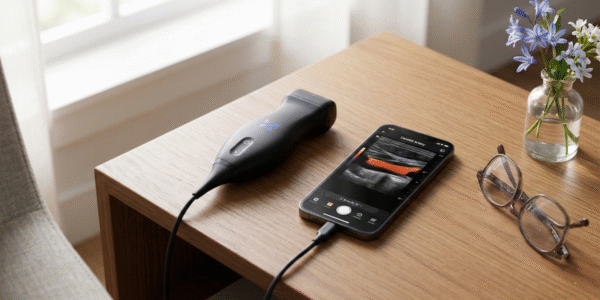
For patients seeking to integrate advanced diagnostics into a personalized longevity plan, Dr. Rebecca Cook provides expert oversight and coordination. As a specialist in geriatrics, Dr. Cook helps residents in Scottsdale and Phoenix manage high-tech home care to ensure medical continuity and proactive health management.
How It Works: 3 Simple Steps to In-Home Care
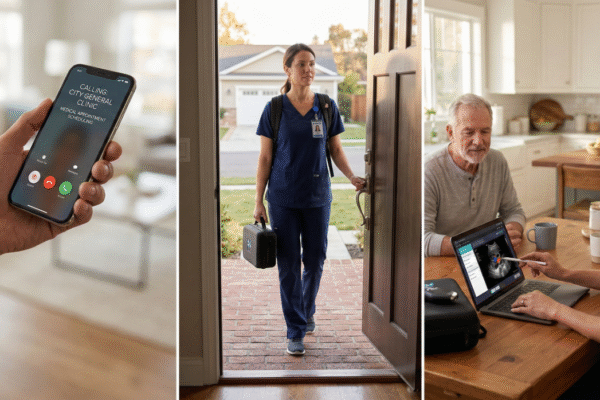
For seniors and their families, the process of receiving an ultrasound under the guidance of Dr. Rebecca Cook is designed to be seamless and stress-free:
-
The Request: You initiate the process by contacting Dr. Cook’s office to discuss your symptoms or screening needs.
-
The Visit: At the scheduled time, a certified specialist arrives at your home in Scottsdale or Phoenix with a handheld, high-resolution diagnostic device.
-
The Results: Dr. Cook personally reviews the AI-enhanced images and contacts you to explain the findings and coordinate any necessary follow-up care.
When Should You Order an In-Home Ultrasound?
Recognizing specific “triggers” can help you and your family decide when to utilize same day ultrasound near me services to prevent unnecessary hospitalizations:
-
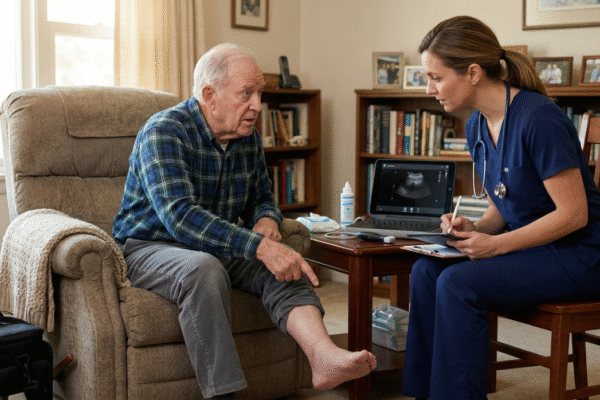
Leg Swelling or Shortness of Breath: Crucial for checking heart and lung function to detect early signs of fluid buildup.
-
Abdominal or Lower Back Pain: Used to rule out issues with the kidneys, gallbladder, or gastrointestinal tract with high precision.
-
Post-Hospital Discharge: Essential for patients in a “Hospital-at-Home” program who need close monitoring to ensure they are recovering safely.
-
Preventative Longevity Screening: For those without symptoms who want to check for carotid artery plaque or early cardiovascular changes.
Choosing the Best Environment for Care
| Feature | Traditional Hospital/Clinic | In-Home with Dr. Rebecca Cook |
| Environment | Crowded waiting rooms and travel stress | Comfort and privacy of your own home |
| Infection Risk | Exposure to hospital-acquired viruses | Minimized risk through bedside care |
| Technology | Large, stationary machines | AI-powered portable ultrasound with “Ultrasound-on-Chip” |
| Oversight | Rotating hospital staff | Direct personal review by your geriatrician |
Demographic Context and the Growth of Ultrasound Scottsdale
The decentralization of healthcare has transformed the Scottsdale market into a hub for point-of-care innovation. This shift is driven by a unique demographic landscape: a high concentration of older adults and a demand for proactive health management focused on longevity.
When patients in the region look for where to get an ultrasound near me, providers like SimonMed and Rezolut are now offering AI-powered screenings for early cancer and heart disease detection directly in private residences. This economic model is sustainable because an in-home diagnostic ultrasound is significantly more affordable for the system than traditional hospital-based imaging.
Macroeconomic Trends in Portable Ultrasound (2025–2026)
| Feature | Traditional Hospital/Clinic | In-Home with Dr. Rebecca Cook |
| Environment | Crowded waiting rooms and travel stress | Comfort and privacy of your own home |
| Infection Risk | Exposure to hospital-acquired viruses | Minimized risk through bedside care |
| Technology | Large, stationary machines | AI-powered portable ultrasound with “Ultrasound-on-Chip” |
| Oversight | Rotating hospital staff | Direct personal review by your geriatrician |
Technological Foundation: AI and Portable Ultrasound
The transformation of home diagnostics in 2026 is rooted in semiconductor-based imaging. Modern portable ultrasound devices utilize “Ultrasound-on-Chip” architecture, which drastically reduces size while maintaining high image quality.
In these systems, AI acts as both an interpretive tool and a quality assurance mechanism. For example, GE HealthCare systems use AI to automatically identify anatomy, reducing manual input by 65%. This technology helps clinicians in Scottsdale identify subtle signs of stroke risk or heart pump dysfunction that might be missed during a standard manual exam.
Clinical Protocols for Bedside Ultrasound (POCUS)
For mobile medical teams, bedside ultrasound (Point-of-Care Ultrasound or POCUS) focuses on answering specific clinical questions to guide immediate treatment.
-
Cardiopulmonary Monitoring: Using an 8-zone lung protocol, clinicians can distinguish between heart failure and pneumonia by looking for “B-lines” (markers of fluid).
-
The VExUS System: This major innovation for 2026 allows for a quantitative assessment of systemic venous congestion. By checking flow patterns in the hepatic and renal veins, Dr. Cook can identify “hidden” congestion that threatens kidney health before physical edema appears.
VExUS Grading Protocol (2026):
-
VExUS 0 (No Congestion): Inferior Vena Cava (IVC) diameter < 2 cm.
-
VExUS 3 (Severe): IVC ≥ 2 cm and two or more pathological flow patterns in the hepatic, portal, or renal veins.
Scottsdale Mobile Ultrasound Services: Key Providers
Dr. Rebecca Cook coordinates with top organizations to provide mobile ultrasound services in Scottsdale:
-
HCI Radiology: Specializes in diagnostics for bedbound patients, offering “STAT” (emergency) imaging within 4 hours.
-
Rezolut: Provides mobile imaging services in Scottsdale AZ, ensuring seamless access to cloud-based images for both the patient and the physician.
-
SimonMed: Offers deep AI-enhanced cardiac and cancer screenings via their “Longevity” portal.
Diagnostic Accuracy: PubMed Data (2025–2026)
Research confirms that bedside ultrasound is a highly reliable tool for acute diagnosis:
-
Appendicitis: 92.2% accuracy.
-
Cholecystitis: 93.7% accuracy.
-
Bowel Obstruction: 94.2% accuracy.
-
Renal Colic (Kidney Stones): 93.9% accuracy.
Mayo Clinic Innovations and Regulatory Standards
Mayo Clinic’s Arizona campuses drive the research behind these mobile tools. Their GEMINI-RT initiative creates “digital twins” of patients to personalize treatment based on home-collected data. Furthermore, Mayo’s AI Cardiology team has achieved a 93% accuracy rate in detecting heart pump dysfunction, making it a more precise screening tool for certain risks than traditional mammography.
Regarding insurance, the “Hospital-at-Home” model has secured permanent status for many institutions, ensuring continued coverage even as some pandemic-era Medicare flexibilities are reviewed in early 2026.
CDC Public Health Data Strategy (2025–2026):
| CDC Goal | 2025 Plan | 2026 Plan | Impact on Diagnostics |
| Real-time ED Data Access | 90% of visits (41 states) | 90% of visits (45 states) | Faster detection |
| Electronic Case Reporting | 50% of critical hospitals | 65% of critical hospitals | Automated transfer |
| AI Integration | Model testing | State-level rollout | Standardized results |
Patient Preparation and Safety Standards
When scheduling same day ultrasound near me, preparation is key to a clear image:
-
Abdominal Scans: Fast for 6–8 hours to reduce gas and improve visibility of the gallbladder and liver.
-
Pelvic Scans: Drink water one hour before the visit; a full bladder is required for optimal viewing.
-
Infection Control: Every visit follows the ALARA principle (As Low As Reasonably Achievable) for ultrasound energy and uses EPA-approved disinfection protocols for all portable equipment.
Key Indicators (2026 Standards):
-
Ejection Fraction (EF): 55% – 70% is normal; below 40% indicates heart failure.
-
Carotid Artery Stenosis: Narrowing above 50% requires immediate medical management to reduce stroke risk.
The integration of professional imaging into the home environment represents a fundamental shift toward proactive, high-precision care. By combining the academic expertise of Mayo Clinic with the personalized oversight of Dr. Rebecca Cook, Scottsdale residents are receiving the highest standard of diagnostic care available in the U.S. today.
Frequently Asked Questions
Is an in-home ultrasound as accurate as a scan performed in a hospital?
Yes, modern portable ultrasound systems using “Ultrasound-on-Chip” technology and AI achieve diagnostic accuracy rates between 92.2% and 94.2% for common conditions like appendicitis and kidney stones. These bedside ultrasound devices deliver hospital-grade results directly in your residence, ensuring critical medical decisions can be made without the stress of an emergency room visit.
How should I prepare for Scottsdale mobile ultrasound services?
Preparation depends on the specific exam; for instance, abdominal or gallbladder scans typically require fasting for 6–8 hours to improve organ visibility. For pelvic or obstetric evaluations, a full bladder is necessary, so patients are advised to drink plenty of water one hour before their same day ultrasound near me appointment.
Does Medicare cover mobile imaging services in Scottsdale AZ?
The “Hospital-at-Home” model has secured permanent status for many institutions, which provides a stable channel for Medicare to reimburse home-based diagnostic services. While certain telehealth flexibilities are under review for 2026, most mobile diagnostic services remain a covered priority to help reduce hospital readmissions and overall healthcare costs.
Is portable ultrasound safe for elderly patients at home?
In-home imaging is exceptionally safe and follows the ALARA principle, using the minimum ultrasound power necessary to obtain a high-quality diagnostic image. Additionally, receiving care at home significantly reduces the risk of exposure to respiratory viruses and hospital-acquired infections (HAI) found in traditional clinical environments.
What symptoms act as a ``trigger`` for needing a bedside ultrasound?
Symptoms such as acute abdominal pain, sudden leg swelling, or shortness of breath are primary triggers for using mobile diagnostics to rule out heart failure or surgical emergencies. These services are also vital for monitoring patients after hospital discharge to detect “hidden” venous congestion before it leads to kidney damage or other complications.
Sources Used:
- SimonMed — https://simonmed.com/
- Utility of Point-of-Care Ultrasound Across Clinical Applications Spurs Continued Growth — https://www.itnonline.com/article/utility-point-care-ultrasound-across-clinical-applications-spurs-continued-growth-0
- Women’s Imaging Services | Mobile Ultrasound — https://www.rezolut.com/mobile-ultrasound
- Portable Ultrasound Market Size, Share & Growth — https://www.fortunebusinessinsights.com/portable-ultrasound-market-104861
- Handheld Ultrasound Devices Market — https://www.novaoneadvisor.com/report/handheld-ultrasound-devices-market
- GE HealthCare Introduces Next Evolution of AI-enabled Voluson Performance Series — https://www.itnonline.com/content/ge-healthcare-introduces-next-evolution-ai-enabled-voluson-performance-series
- The rise of point-of-care ultrasound in cardiopulmonary diagnostics — https://pmc.ncbi.nlm.nih.gov/articles/PMC12756059/
- Diagnostic Accuracy of Point-of-Care Ultrasound in Detecting Pneumothorax — https://pmc.ncbi.nlm.nih.gov/articles/PMC12862262/
- Evaluating the Diagnostic Accuracy of Point-of-Care Ultrasound in Acute Abdominal Pain — https://pmc.ncbi.nlm.nih.gov/articles/PMC12542799/
- HCI Radiology | Mobile Diagnostic and Healthcare Imaging Services — https://www.hciradiology.com/
- GE HealthCare and Mayo Clinic unveil GEMINI-RT — https://www.stocktitan.net/news/GEHC/ge-health-care-and-mayo-clinic-unveil-gemini-rt-a-bold-research-x5m53ha87eqd.html
- Artificial Intelligence (AI) in Cardiovascular Medicine – Mayo Clinic — https://www.mayoclinic.org/departments-centers/ai-cardiology/overview/ovc-20486648
- Telehealth in Transition — https://assets.advocacyincubator.org/uploads/2025/TelehealthExp.pdf
- Public Health Data Strategy Milestones for 2025 and 2026 | CDC — https://www.cdc.gov/public-health-data-strategy/php/about/phds-milestones-2025-and-2026.html
- Ultrasound – Mayo Clinic — https://www.mayoclinic.org/tests-procedures/ultrasound/about/pac-20395177
- Viral Respiratory Pathogens Toolkit for Nursing Homes | CDC — https://www.cdc.gov/long-term-care-facilities/hcp/respiratory-virus-toolkit/index.html
- Preparing Seniors and Caregivers for Advanced Diagnostic Imaging in 2026 — https://allseniors.org/articles/preparing-seniors-and-caregivers-for-advanced-diagnostic-imaging-in-2026-2/
- OnSite Imaging Echocardiogram and Doppler Report Form — https://echocardiography-report-template-doc.pdffiller.com/
- Mayo Clinic School of Health Sciences 2026 Radiography Program Handbook — https://college.mayo.edu/media/mccms/content-assets/academics/health-sciences-training/radiography-program-florida/2026RadiographyProgramStudent-Handbook-.pdf
- Governance Considerations for Point-of-Care Ultrasound — https://www.researchgate.net/publication/387706491_Governance_Considerations_for_Point-of-Care_Ultrasound_a_HIMSS-SIIM_Enterprise_Imaging_Community_Whitepaper_in_Collaboration_with_AIUM
- Home – PULSENMORE | Home Ultrasound — https://pulsenmore.com/
- 9 technological innovations that make pregnancy and childbirth a more pleasant experience — https://www.jpost.com/consumerism/article-844461
The information provided in this article is for educational and informational purposes only and is not intended as medical advice, diagnosis, or treatment.