To maintain mobility after age 65 and significantly reduce the risk of life-altering injuries, seniors must adopt a comprehensive strategy that prioritizes strength and balance training for older adults, utilizes modern bioelectronic or pharmacological therapies for joint inflammation, and ensures optimal bone density through targeted clinical care. Combining these medical advancements with home safety modifications and professional gait assessments allows for a proactive, independent lifestyle well into the later decades.
Expert Guidance for Your Mobility Journey
Understanding the Link Between Joint Health and Mobility in Arizona
For residents of Phoenix and Scottsdale, an active lifestyle is more than a preference—it is a vital component of longevity. Whether it’s navigating the trails of Camelback Mountain or staying active in community centers, movement is what keeps the cardiovascular and nervous systems resilient. However, as we look at data for 2026, the challenge remains significant: falls are the leading cause of injury-related hospitalizations for Americans over 65.
The connection between joint health and stability is direct. Degenerative conditions like osteoarthritis do not just cause localized discomfort; they fundamentally alter the mechanics of how a person walks. When a knee or hip joint becomes stiff, the body instinctively compensates by shortening the stride or shifting weight unevenly. This “guarded gait” is a primary risk factor for losing balance. In the dry, intense heat of Arizona, where minor dehydration can already affect cognitive focus, having a stable musculoskeletal foundation is the most critical defense against accidents.
Modern Management of Osteoarthritis: From Bioelectronics to Targeted Therapy
The Bioelectronic Revolution: The SetPoint System
A major breakthrough in 2025–2026 is the application of bioelectronic medicine for chronic joint inflammation. The SetPoint system, a micro-implantable device, represents a paradigm shift. By stimulating the vagus nerve, it helps the body naturally regulate the inflammatory cytokines that cause joint swelling and pain. For seniors in Scottsdale who prefer to avoid long-term systemic medications, this targeted technology offers a way to maintain joint function and reduce the “heaviness” often felt in arthritic limbs.
Strengthening the Quadriceps: Your Natural Shock Absorbers
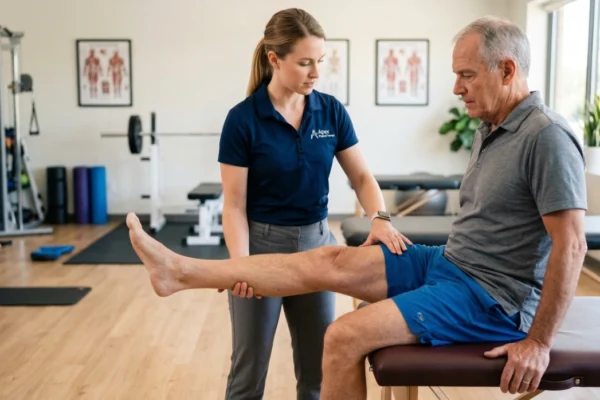
Clinical evidence continues to reinforce that the health of the knee joint is inextricably linked to the strength of the surrounding muscles, particularly the quadriceps. These muscles act as the body’s primary shock absorbers during walking and stair climbing. For many patients, a structured program to rebuild lower-body strength can reduce the mechanical pressure on the knee joint by nearly 30%, effectively slowing the progression of cartilage wear.
Strength and Balance Training for Older Adults: The Clinical Gold Standard
While medical treatments repair the “hardware” of the body, strength and balance training for older adults serves as the essential update to the body’s “software”—the neurological connection between the brain and the limbs.
The Therapeutic Power of Tai Chi
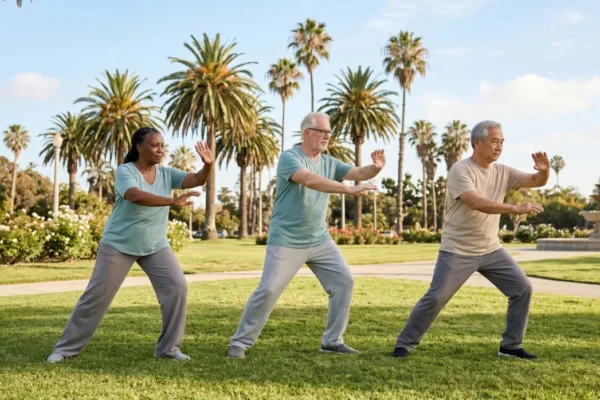
Tai Chi has transitioned from a traditional art to a clinically recognized medical intervention. Research shows that consistent Tai Chi practice—specifically focusing on weight shifting, slow-motion pivots, and “rooting” the feet—can reduce the risk of falling by up to 50%. In many Phoenix-based senior centers, Tai Chi is now integrated into standard wellness protocols because it simultaneously addresses muscle strength, joint flexibility, and mental focus.
Implementing the CDC STEADI Protocol
Healthcare providers in the Scottsdale area are increasingly utilizing the STEADI (Stopping Elderly Accidents, Deaths & Injuries) algorithm for comprehensive risk assessments. This involves three key physical tests:
-
The Timed Up and Go (TUG) Test: Measuring the time it takes to rise from a chair, walk three meters, and sit back down.
-
The 30-Second Chair Stand: Assessing lower-body strength and endurance.
-
The 4-Stage Balance Test: Evaluating static balance in different foot positions.
If a resident finds themselves holding onto furniture while navigating their home or feeling “unsteady” when turning around, engaging in strength and balance training for older adults is the most effective way to reverse these deficits.
Robotic Precision: Surgical Innovations for Faster Recovery
When conservative measures are no longer enough to maintain a high quality of life, the surgical options available in 2026 are more precise than ever. Robotic-assisted platforms, such as Mako SmartRobotics, have redefined expectations for hip and knee replacements.
The advantage of a robotic-assisted procedure is the level of personalization it allows. A 3D CT-based plan allows the surgeon to visualize the unique anatomy of your joint before any incision is made. During the procedure, the robot provides real-time data on ligament tension, ensuring the implant is perfectly aligned. For the patient, this precision translates to a joint that feels more “natural,” has a significantly lower risk of post-operative instability, and allows for a much faster return to the golf course or tennis court.
Building the Foundation: Bone Health and Osteoporosis Treatment
You cannot have healthy mobility without a strong skeletal frame. Osteoporosis treatment is a critical component of any longevity plan. In the “Valley of the Sun,” many seniors are surprisingly Vitamin D deficient. The extreme summer heat often leads to a sedentary indoor lifestyle, and aging skin becomes less efficient at synthesizing Vitamin D from sunlight.
Ensuring adequate levels of Vitamin D and calcium is essential, but for those with significant bone loss, modern 2026 protocols also include bone-building medications (anabolics). These treatments don’t just slow bone loss; they actively increase bone density over a 12-to-24-month period, providing a crucial “safety net” that prevents fractures even if a trip occurs.
Environmental Safety: Practical Fall Prevention in the Arizona Home
The majority of falls occur within the home, often triggered by simple environmental hazards that are easily corrected.
-
Lighting and Contrast: Many Arizona homes feature monochromatic tile flooring, which can be visually confusing. Installing high-contrast tape on the edges of steps and motion-activated night lights in hallways significantly improves spatial awareness.
-
Strategic Footwear: Proper mobility assistance starts with what you wear on your feet. Podiatrists recommend avoiding “floppy” slippers or walking barefoot. Footwear with firm heel counters and slip-resistant soles—such as those from New Balance or Orthofeet—provides the stable base needed to prevent the ankle rolls that often lead to falls.
-
Home Modification: Removing throw rugs, clearing electrical cords from walkways, and installing grab bars in the bathroom are strategic upgrades that preserve independence.
Aging does not have to mean a loss of freedom or a fear of movement. By combining strength and balance training for older adults with the latest advancements in osteoporosis treatment and joint preservation, you can maintain your trajectory of health. Whether you are managing early-stage arthritis or looking to optimize your balance, taking action today—through both medical consultation and physical exercise—ensures that you remain the master of your own movement.
Frequently Asked Questions
What are the most effective strategies for preventing falls in the elderly?
A combination of consistent strength and balance training for older adults and environmental safety modifications is the most effective way to ensure fall prevention. Regularly reviewing your medications and maintaining optimal bone health through clinical guidance also significantly reduces the likelihood of an accident.
Which balance exercises are best for maintaining long-term mobility?
Tai chi is widely considered the gold standard because it improves “rooting,” coordination, and weight-shifting capabilities. Supplementing this with lower-body resistance exercises to strengthen the quadriceps provides the physical stability needed to navigate uneven surfaces safely.
How does Vitamin D impact bone health and the risk of tripping?
Vitamin D is essential for calcium absorption and muscle fiber function, making it a cornerstone of effective osteoporosis treatment. Maintaining healthy levels ensures your skeletal frame is resilient and your muscles can react quickly to correct your balance if you stumble.
Can chronic joint pain increase my personal risk of falling?
What should I expect during a professional fall risk assessment?
Sources Used:
- About Older Adult Fall Prevention – CDC — https://www.cdc.gov/falls/about/index.html
- Facts About Falls | Older Adult Fall Prevention | CDC — https://www.cdc.gov/falls/data-research/facts-stats/index.html
- SetPoint Medical: Home — https://setpointmedical.com/
- Global research hotspots and emerging trends in orthopedic robotic surgery – PMC — https://pmc.ncbi.nlm.nih.gov/articles/PMC12808197/
- Fall Risk Assessment Tools, Tests & Prevention Guide 2025 – SPRY — https://www.sprypt.com/fot/fall-risk-assessment
- Fall prevention: Simple tips to prevent falls – Mayo Clinic — https://www.mayoclinic.org/healthy-lifestyle/healthy-aging/in-depth/fall-prevention/art-20047358
- Osteoarthritis – Diagnosis & treatment – Mayo Clinic — https://www.mayoclinic.org/diseases-conditions/osteoarthritis/diagnosis-treatment/drc-20351930
- The 2025 Rheumatology Year in Review | RheumNow — https://rheumnow.com/news/2025-rheumatology-year-review
The information provided in this article is for educational and informational purposes only and is not intended as medical advice, diagnosis, or treatment.