In the modern healthcare landscape, there is a dedicated field focused entirely on maintaining quality of life and functionality during one’s senior years. To fully understand what is a geriatric specialist, one must view this physician as an expert who analyzes more than just medical data; they evaluate how successfully an individual maintains their independence, cognitive health, and social engagement. This professional does not simply treat diseases—they help individuals age with dignity and vitality.
The Role of a Dr for Old People: More Than General Medicine
In everyday conversation, this specialist is often referred to as a dr for old people, but their responsibilities extend far beyond the scope of general practice. While a primary care physician typically focuses on treating specific acute or chronic illnesses, a geriatrician views the patient’s body as a complex, interconnected system, accounting for the unique physiological changes that occur with age.
Why Choose a Certified Geriatric Specialist?
When seeking medical care for an aging family member, the physician’s specific qualifications are paramount. Consulting a certified geriatric specialist ensures the doctor possesses advanced training in critical areas:
-
Pharmacokinetics: Understanding how medication metabolism changes in older adults to prevent adverse reactions.
-
Cognitive Health: Specialized methods for the early detection and management of dementia and other cognitive declines.
-
Mobility Preservation: Developing personalized programs to improve balance and manage bone density.

Geriatric Care Management and Modern Standards of Care
Effective healthcare in later life cannot be limited to sporadic office visits. The modern system of geriatric care management involves continuous health oversight, which includes the coordination of all medical prescriptions, nutritional monitoring, and adapting the patient’s lifestyle to their evolving needs.
Innovative medical services play a vital role in this ecosystem. A prime example is the practice of Dr. Rebecca Cook, operating in the state of Arizona. Her official platform, showcases service formats designed for maximum patient comfort, ranging from virtual consultations to professional house calls. This approach allows geriatric care management to be implemented in a familiar home environment, which is critically important for the effective management of chronic conditions like diabetes or arthritis.
Professional oversight helps in the timely intervention for various age-related issues known as geriatric disorders, including osteoporosis, balance instability, chronic fatigue, and late-life depression.
Geriatrician vs. General Practitioner: Key Differences
While their goals may overlap, the approaches of a geriatrician and a general practitioner (GP) differ significantly:
| Feature | General Practitioner (GP) | Geriatrician |
| Primary Focus | Treating acute and chronic illnesses. | Preserving functionality and autonomy. |
| Clinical Approach | Follows general medical protocols. | Individualized approach tailored to aging. |
| Medication Policy | Prescribes drugs per standard treatment. | Minimizes medications and focuses on deprescribing. |
| Care Coordination | Usually works independently. | Coordinates family members, caregivers, and specialists. |
When to Seek Help: Understanding the Age of Geriatric
It is generally accepted that the age of geriatric care begins between 60 and 65 years old. However, the medical community recommends looking beyond the calendar and paying attention to objective “red flags” that require a specialist’s intervention:
-
Frequent memory lapses or episodes of sudden confusion.
-
Unexplained falls or an increasing instability when walking.
-
The “polypharmacy” effect—taking more than five different medications simultaneously.
-
Difficulty performing daily household tasks, such as cooking or maintaining personal hygiene.
How to Find a Qualified Specialist
Finding the right physician for an aging loved one requires more than a simple internet search. To ensure high-quality care, it is essential to look beyond the general title of dr for old people and evaluate specific professional criteria.
Verify Board Certification
Always check if the provider is a certified geriatric specialist. This means the physician is board-certified in Internal or Family Medicine and has completed additional fellowship training in geriatrics. This certification ensures they understand the unique way diseases present in older bodies and how to manage the “polypharmacy” effect—reducing the risks of taking multiple medications simultaneously.

Look for a Comprehensive Geriatric Assessment (CGA)
A truly qualified geriatric physician near me should offer a Comprehensive Geriatric Assessment. Unlike a standard 15-minute check-up, a CGA is an in-depth evaluation of medical, functional, and cognitive health. When calling a clinic, ask: “Does the doctor perform a full functional and cognitive screening as part of the initial visit?”
Prioritize Accessibility and Home-Based Care
For many seniors, traveling to a clinic can be physically exhausting or even hazardous. Modern geriatric care management now emphasizes meeting the patient where they are most comfortable.
-
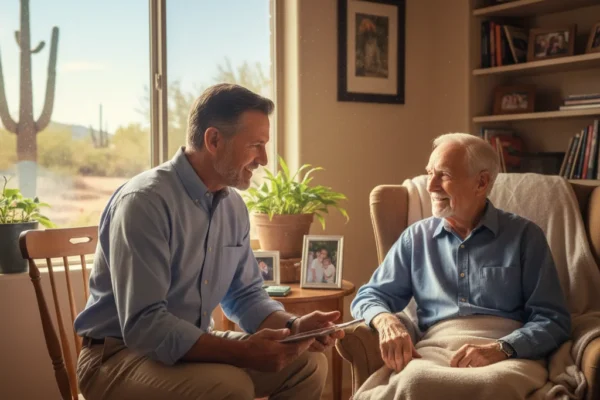
The House Call Advantage: Practice models like that of Dr. Rebecca Cook in Arizona prioritize home-based visits and virtual care.
-
Environmental Safety: A specialist visiting the home can perform a professional assessment of the living environment, identifying fall hazards that would be invisible in a hospital setting. If mobility is an issue, searching specifically for geriatric care management near me that includes mobile or telehealth services is a vital step for long-term health.
Evaluate the Coordination of Care
Geriatric health is rarely about a single issue. A top-tier specialist acts as a “health conductor,” coordinating between various therapists, social services, and other medical experts. When researching geriatric doctors near me, look for practices that emphasize communication with the entire family and integration with existing physical health programs.
Aging is a natural transition, and the role of the geriatrician is to make this journey as comfortable as possible, preserving the joy of connection and community participation for years to come.