The information provided in this article is for educational and informational purposes only and is not intended as medical advice, diagnosis, or treatment.
Telehealth lets seniors see a doctor by phone or video without leaving home. It works well for many everyday needs, like medication reviews and follow-up visits. But some problems still need a hands-on exam, and that is when an in-person house call is the better choice. Knowing the difference helps older adults in Phoenix and Scottsdale get the right care at the right time.
Dr. Rebecca Cook offers both video visits and house calls for older adults across Phoenix and Scottsdale. Seniors who want care that fits their needs can schedule a consultation with Dr. Cook to talk through the best option.
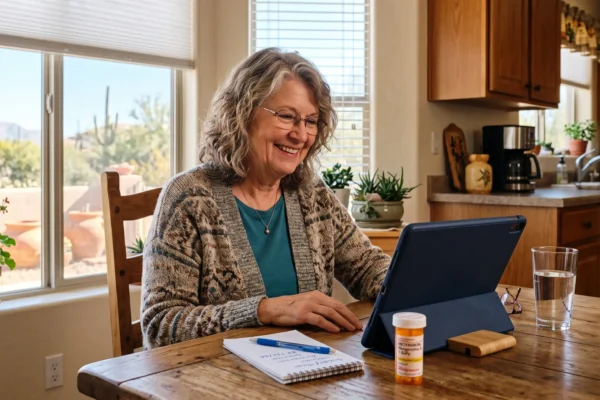
What Telehealth Is and How It Works
The Growing Role of Telemedicine in Healthcare
Today, many healthcare telehealth tools are built with older adults in mind. Features like larger text, touch screens, and closed captions make a video visit easier for people with vision or hearing loss. Dr. Cook’s office helps Phoenix and Scottsdale seniors get set up so the technology never gets in the way of care.
When a Video Visit Works Well
Best Uses for a Telehealth Visit
- Routine check-ins for stable, ongoing conditions like high blood pressure or diabetes
- Medication reviews and refills
- Going over lab or test results
- Minor concerns, such as a cold, a skin rash, or a simple question
- Mental health visits, like talking through anxiety or low mood
These visits also let a family member join in. They can sit in the same room or call from another city. That makes it easier for everyone to stay on the same page.
A Good Fit for Chronic Care
This steady contact is one of the main reasons telehealth helps older adults stay healthy at home. It cuts down on long drives and time spent in waiting rooms.
The Limits of Telehealth
What a Screen Cannot Do
Lab work, imaging, vaccines, and many treatments also cannot be done through a screen. For these, a senior needs a doctor in the same room. That is where an in-person visit, and often a house call, becomes the smarter choice.
When Seniors Need a House Call
Signs an In-Person Visit Is Better
- There is a new or unclear problem that needs a hands-on exam
- The senior has many conditions that are hard to track on a screen
- A wound, fall, or sudden change in health needs a close look
- Vital signs, like blood pressure or oxygen, need to be measured
- The patient has trouble with vision, hearing, or memory that makes video hard
Patients sometimes ask, “Can my house call replace a regular clinic visit?” In many cases it can. Dr. Cook does the same careful exam at home that a senior would get in an office. The big difference is comfort, since the patient stays in their own home in Phoenix or Scottsdale.
What Makes a House Call Special
- The doctor can spot trip hazards, like loose rugs or poor lighting
- She can check the kitchen and see how a senior eats
- She can review every pill bottle in the home at once
- Family and caregivers can take part and ask questions
These details often get missed in a clinic. At home, they are easy to see and fix.
How Telehealth and House Calls Work Together
For example, a senior might have a video visit to review test results. Then they book a home visit a week later for a hands-on exam. Dr. Cook builds this kind of plan around each patient, so the right tool is used for the right need.
Having one doctor who knows the whole story is a big plus. The same doctor sees the video visits and the house calls. Nothing gets lost between offices, and the senior never has to repeat their history again and again. This kind of steady care leads to fewer mix-ups and better health over time.
Care Built Around Phoenix and Scottsdale Seniors
Both video visits and house calls take that burden away. A senior can get checked from a cool, safe home. Dr. Cook serves older adults across Phoenix and Scottsdale, and she helps each patient pick the visit that fits the day. For some, that is a quick video call. For others, it is a doctor at the door.
Getting Ready for a Visit
Tips for a Smooth Telehealth Visit
- Charge the device and test the camera and sound ahead of time
- Sit in a quiet, well-lit room
- Keep a current medicine list and any recent readings nearby
- Write down questions before the visit starts
- Ask a family member or caregiver to help with the setup if needed
For a house call, seniors can have their medicine bottles, a list of symptoms, and any recent paperwork ready. Either way, being prepared helps the doctor give the best advice in the time you have together.
Frequently Asked Questions
What is telehealth, and how does it work for seniors?
Telehealth lets a senior meet with a doctor by phone or video instead of going to an office. It works well for follow-ups, medication reviews, and minor concerns. All that is needed is a phone, tablet, or computer and a quiet, well-lit spot at home.
When is a video visit good enough, and when do you need a house call?
A video visit is a good fit for talking, looking, and reviewing, such as stable chronic care or test results. A house call is better when a hands-on exam, vital signs, or a close look at a wound is needed. Many seniors use both depending on the day’s concern.
What can a doctor not do during a telehealth visit?
A doctor cannot do a full physical exam through a screen, so they cannot listen to the heart and lungs, feel the abdomen, or take blood pressure by hand. Lab tests, imaging, and vaccines also require an in-person visit. These needs are why house calls still matter.
Are house calls still available for older adults?
Yes. House calls for seniors are offered by doctors who focus on home-based care, including Dr. Rebecca Cook in Phoenix and Scottsdale. A house call brings a full exam to the home, which is helpful for frail or homebound patients who find clinic trips hard.
Is a telehealth visit safe and private for seniors?
Yes. Telehealth uses secure tools to protect a patient’s privacy, much like an in-person visit. Sitting in a quiet, private room at home keeps the conversation confidential. A caregiver can join if the senior wants help during the visit.
How do seniors prepare for a telemedicine call?
Charge the device, test the camera and sound, and sit in a quiet, well-lit room. Keep a current medicine list, recent readings, and written questions close by. Asking a family member to help with setup can make the visit go smoothly.