The information provided in this article is for educational and informational purposes only and is not intended as medical advice, diagnosis, or treatment.
After 60, some vision changes are a normal part of aging, and some are early signs of an eye problem. An eyesight exam is the clearest way to tell the two apart. Needing more light to read or seeing a few floaters is usually normal. Sudden blurry vision, eye pain, or a fast drop in sight is not. This guide explains what vision changes are normal with age, which ones are warning signs, and how a simple eye exam protects your sight.
For older adults in Phoenix and Scottsdale, keeping up with eye care can feel like one more errand. Geriatric physician Dr. Rebecca Cook works with patients 65 and older and can help coordinate eye referrals and ongoing care; families can learn more about her practice. When getting to a clinic is hard, it also helps to know you can choose a doctor who visits you at home through the Doctor2me network, so a checkup does not always mean a trip across town.
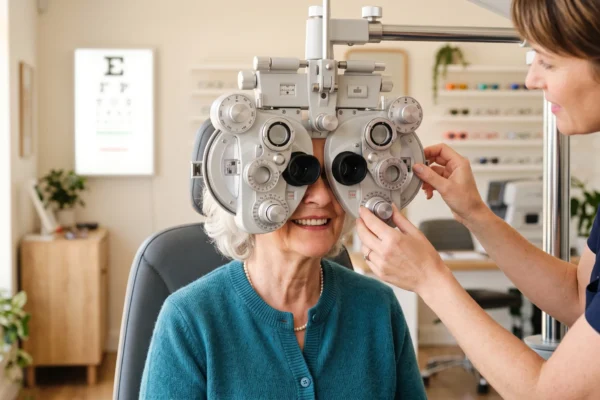
What Vision Changes Are Normal With Age
Presbyopia and Reading Up Close
Floaters in Vision and Dry Eye
How Aging Slowly Changes the Eye
Types of Eyesight Changes That Signal a Problem
When a Blurry Eye Is More Than Age
Warning Signs That Need Fast Care
Common Eye Problems After 60
Cataracts
Glaucoma
Dry Macular Degeneration
Diabetes and Vision Disease
Why an Eyesight Exam Matters After 60
How Often to Get an Eyesight Exam
Habits That Protect Vision
Everyday Signs Worth Paying Attention To
Sudden Versus Slow Changes
Frequently Asked Questions
What vision changes are normal after 60?
It is normal to need more light to read, to have trouble focusing up close (presbyopia), to see occasional floaters, and to have drier eyes. These slow changes come from normal aging of the lens, tear glands, and the gel inside the eye. Regular exams help tell normal aging apart from disease.
Is blurry vision a normal part of getting older?
Mild blurriness up close is usually presbyopia, which glasses can correct. But new or fast blurry vision can be an early sign of cataracts, macular degeneration, or glaucoma. Because these respond best to early care, new blurriness should be checked by an eye doctor.
When should I worry about vision changes and see a doctor right away?
Get urgent care for a sudden burst of new floaters, flashes of light, a dark curtain across your side vision, sudden vision loss, double vision, or eye pain. Straight lines that suddenly look wavy are also a warning sign. These can point to a retinal or other serious problem.
Are eye floaters dangerous?
Most floaters are harmless and come from the eye’s gel shrinking with age, usually appearing between 50 and 70. They often fade over time and need no treatment. But a sudden increase in floaters, especially with flashes or a shadow, can mean a retinal tear and needs fast care.
What is dry macular degeneration?
Dry macular degeneration is the most common form of AMD, making up nearly 90% of cases. It happens when small deposits called drusen build up under the macula, the center of sharp vision. An early warning sign is straight lines that look wavy, which should be checked promptly.
How often should people over 60 get an eyesight exam?
Eye experts generally advise a complete exam about every year or so after age 50, and every one to two years after 65. People with diabetes, a family history of eye disease, or an existing eye condition may need exams more often. Ask your eye doctor for a schedule that fits you.