A cough that will not quit in Arizona is not always a cold. Valley fever is a lung infection you breathe in from dry soil.
According to the Arizona Department of Health Services 2024 annual report, the state logged 14,763 reported cases that year, a rate of 193.7 per 100,000 residents. Adults aged 75 to 84 had the highest rate of any age group, 416.8 per 100,000. So valley fever in Arizona lands on older lungs more often than on younger ones.
The hard part is separating it from ordinary pneumonia. CDC says valley fever causes the same symptoms as pneumonia from bacteria or viruses, which is why it is often misdiagnosed or never diagnosed at all. Early antifungal treatment can save lives, so the delay is the real risk.
Valley Fever Symptoms in Older Adults
- Fatigue, or tiredness
- Cough
- Fever and headache
- Shortness of breath
- Night sweats
- Muscle aches or joint pain
- Rash on the upper body or legs
CDC also advises contacting a provider when symptoms last longer than a week. In Arizona that one line carries most of the weight, because a week of coughing during a dusty stretch is easy to write off as allergies or a cold going around.
How Soon Symptoms Start After Dust Exposure
The Valley Fever Rash
Is It Valley Fever or Pneumonia?
That is why your address and your travel matter at the visit. Living in Phoenix, Scottsdale or anywhere else in the Sonoran Desert, or passing through recently, changes which tests are worth ordering. Say it out loud rather than assuming it is already in the chart.
Fungal pneumonia also does not answer to antibiotics aimed at bacteria. CDC warns that misdiagnosis can lead to ineffective treatment or a delay in the antifungal treatment some people need, so finishing a course of antibiotics and still feeling wrung out three weeks later is a reason to ask about valley fever by name.
How Serious Is Valley Fever in Arizona?
Cleveland Clinic (2024) puts the death rate at fewer than 1 in 100 people who have the infection. Those odds are low, which is the reassuring half of the picture. They are also the reason the rare path has a name of its own.
The table below lines up the questions people ask first against what the sources actually report. Keeping the numbers in one place makes it easier to see which part of this illness is common and which part is rare, instead of hunting for them across several paragraphs.
| What people ask | What the sources report |
|---|---|
| How soon symptoms start | 5 to 21 days after breathing in the spores (MedlinePlus, 2024) |
| How long symptoms last | A few weeks to a few months, longer in severe cases (CDC, 2024) |
| How often it turns serious | 5 to 10% develop long-term lung problems, about 1% spread beyond the lungs (CDC, 2024) |
| Who gets it most in Arizona | Highest rate in adults aged 75 to 84, 416.8 per 100,000 (Arizona Department of Health Services, 2024) |
What Disseminated Coccidioidomycosis Means
The sign a family can actually see is on the skin. MedlinePlus notes that skin sores, most often on the face, are frequently a sign that the disease has spread, and that people with the spread form have a high death rate. New facial sores during a long illness are worth a call the same week, not next month.
How Long Does Valley Fever Last?
Full recovery often runs behind the cough. Mayo Clinic notes it can take months to recover fully, with tiredness and joint aches hanging on after the rest has settled. That long tail is easy to mistake for ordinary aging, which is one more reason it goes unmentioned at appointments.
A smaller group develops the long-term lung form. Cleveland Clinic describes chronic pulmonary coccidioidomycosis with chest pain, an ongoing cough, coughing up blood, shortness of breath and unexplained weight loss. Weight nobody meant to lose is a symptom in its own right, and in older adults it has its own list of causes worth ruling out.
How Did I Catch It, and Is It Contagious?
The fungus lives in dry soil in parts of Arizona, California, Nevada, Utah, New Mexico, Texas and Washington, as well as northern Mexico and parts of Central and South America. Anything that lifts that soil into the air sends the spores up with it: wind, digging, construction, farm work, even a dog running across a dry yard.
So there is no habit to feel guilty about here. Breathing outdoors in the desert is the exposure. Pets breathe the same soil and can get infected too, which is why a coughing dog and a coughing owner in one house is not a coincidence, and CDC confirms it is not contagious either.
Why Valley Fever Often Gets Missed at the First Visit
The confirming test is a specific one. Cleveland Clinic notes that blood tests looking for antibodies or antigens to Coccidioides are the most common way to diagnose valley fever, and that the diagnosis also rests on symptoms, travel history and a physical exam.
This is where a physician who practices in Arizona year-round has the advantage. Seeing older patients in their own homes across Scottsdale, Paradise Valley, Fountain Hills and the East Valley, Dr. Rebecca Cook hears the same lingering desert cough often enough to put the fungus on the list early rather than after a second failed round of antibiotics.
Who Is Most at Risk for a Severe Case
Age and Health Conditions
Mayo Clinic explains the age link without mystery. Immune systems weaken with age, and older adults often carry other medical conditions at the same time. Its risk list also names a weakened immune system from illness or treatment, pregnancy in the third trimester, and people whose families come from the Philippines or Africa.
Diabetes appears on that list as well, as a risk for serious lung infection. If nobody has checked blood sugar in a while, the early signs of diabetes in older adults are worth knowing for more reasons than this one.
Dust, Work and Time Outdoors
Lowering Your Risk During Arizona's Dust Season
- Stay inside during dust storms and keep doors and windows closed
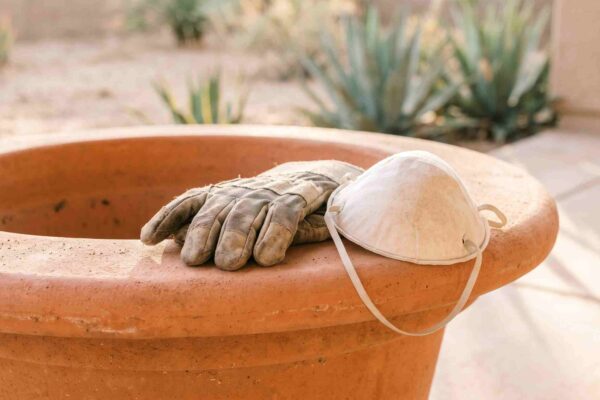
- Wear an N95 mask for gardening, digging and other yard work
- Wet the soil before you dig in it
- Run a HEPA air filter indoors
- Keep away from construction sites and other very dusty places
- Wash any cut or scrape with soap and water
None of this is optional detail, because there is nothing else to fall back on. Mayo Clinic states plainly that no vaccine prevents valley fever, which leaves controlling exposure as the only prevention there is. For anyone over 60 in the Phoenix area, that makes a mask in the garage shelf worth keeping.
Dust Season and Heat Season Overlap
Getting Tested Without a Trip Across Town
Mobile imaging and lab work at home cover both pieces across Arizona, with X-rays and blood collection done where the patient already is. A home visit is also where the history gets taken properly: dust exposure, how long the cough has run, what the last course of antibiotics changed, which other conditions are in play.
Dr. Cook sees older patients in their own homes across the Phoenix area and can order the valley fever panel at the same visit. If the cough has outlasted a week and the air has been dusty, that is the conversation worth having now rather than after another month of waiting it out.
Frequently Asked Questions
Can you get valley fever twice?
In most cases, no. Cleveland Clinic notes that people who get valley fever and recover are unlikely to get it again. A repeat episode is possible but uncommon.
When is the highest-risk time of year in Arizona?
Risk climbs in the dry season that follows a rainy stretch, once loose soil dries into dust. Any windy or dusty day in between raises exposure too, which is part of why Arizona holds its Valley Fever Awareness Week in November.
Does a valley fever diagnosis mean time in the hospital?
Usually not. CDC notes that many people get better on their own within weeks or months with no treatment at all. Severe infections, or ones that have spread, need antifungal medication and may require hospital care.
What is desert rheumatism?
It is an older nickname for the same infection. Cleveland Clinic explains that providers sometimes use it when valley fever shows up mainly as lumps under the skin, fever and stiff joints rather than as a chest illness.
Can valley fever come back after treatment ends?
Relapses are possible with the chronic and spread forms. MedlinePlus notes that the outlook with treatment is usually good for chronic or severe disease, though relapses may occur. That is why follow-up continues after the first round.
Can valley fever affect the bones and joints?
Yes, though it is uncommon. CDC lists bones and joints among the places the infection can reach once it spreads past the lungs, alongside the skin and the central nervous system.
Sources Used
Symptoms of Valley Fever – Centers for Disease Control and Prevention (2024)
Valley Fever – Cleveland Clinic (2024)
Valley fever – Mayo Clinic (2026)
Valley fever – MedlinePlus Medical Encyclopedia, National Library of Medicine (2024)
Valley Fever 2024 Annual Report – Arizona Department of Health Services (2024)
What is a HEPA filter? – US EPA (2026)
How to Use Your N95® Respirator | Personal Protective Equipment – CDC (2026)