The information provided in this article is for educational and informational purposes only and is not intended as medical advice, diagnosis, or treatment.
Your parents fell. Check for injury before moving them, watch them closely for a full day, then find out why it happened.
Falls are so common that families often shrug them off. According to the CDC (2026), more than one in four adults age 65 and older falls each year, about 4.5 million of those falls lead to an emergency department visit, and nearly 319,000 older adults are hospitalized for a hip fracture.
The hours right after a fall matter more than most people expect. Some injuries are obvious. Others, especially inside the head, stay quiet for a day or longer. Knowing what to look for takes much of the guesswork out of a frightening evening.
What Should You Do in the First Few Minutes After a Fall?
Ask whether anything hurts, and where. Ask if they can move both arms and both legs. Look at the hips, wrists, and shoulders, since those take the most damage in a fall. An arm or leg that looks twisted, or a hip that will not bear weight, means you call 911 and leave them where they are.
Also ask what happened. Did they trip over something, or did the room go dark first? A trip and a blackout point to very different problems. Write down the answer while it is fresh, because it is the first thing a doctor will want.
How to Help Someone Up Without Making Things Worse
When Someone Cannot Get Up at All
How Do You Check for a Head Injury After an Elderly Fall?
Cleveland Clinic (2024) lists several signs that need urgent care after a bump on the head: a headache that keeps getting worse, blurred vision or ringing in the ears, slurred speech, trouble concentrating, weakness on one side of the body, and behavior that is not like them.
Clear or bloody fluid from the nose or ears, repeated vomiting, pupils of different sizes, or trouble staying awake all mean emergency care now, not in the morning. The same goes for any loss of consciousness, even a few seconds of it.
Why Blood Thinners Change the Math
Why Do Symptoms Sometimes Show Up a Day or Two Later?
Cleveland Clinic (2024) explains that a chronic subdural hematoma is more common after 65, because the brain shrinks slightly with age and the small veins around it stretch and tear more easily. Symptoms may not appear for weeks, and they often look like confusion, memory trouble, or disorientation rather than pain.
So the practical answer is to keep watching. For the first 24 hours, check on them every few hours, including once overnight. For the next couple of weeks, pay attention to new confusion, new clumsiness, a change in walking, or a personality shift. Any of those earns a phone call.
Head injuries in this age group are not rare, which is why the watching is worth the trouble. The CDC (2026) reports that death rates from traumatic brain injury in older adults rose about 22% over the past decade, with falls among the leading causes. The same agency counts about 37 million falls a year in this age group.
Why Did My Parents Fall in the First Place?
As a geriatric doctor, I see the same short list again and again: medicines, blood pressure, weak legs, eyesight, and the home itself. Usually two or three of them stack up on the same person. The table below sets out what each one tends to look like at home.
Medicines and Blood Pressure
Blood pressure deserves its own check. If it drops when your parent stands up, they may feel wobbly for a few seconds on the way out of a chair or bed. That window is when many falls happen. Readings taken both lying down and standing show it clearly.
Eyesight, Fluids, and Footwear
Small changes in sight raise fall risk, and they creep up quietly. A missed step on a curb or a bump into a door frame is often the first clue, which is why an eye exam after 60 belongs on the list after any fall.
In Arizona, fluids matter more than people think. Dehydration in seniors can show up as dizziness and tiredness long before anyone feels thirsty, and a lightheaded moment is all a fall needs. Backless slippers and smooth soles finish the job.
Common Causes of Falls and What Usually Helps
| Possible Cause | What It Looks Like at Home | What Usually Helps |
|---|---|---|
| Medicines that cause dizziness or drowsiness | Unsteady soon after a dose, or worse at night | A full review of every medicine and supplement |
| Blood pressure that drops on standing | Wobbly for a few seconds getting out of a chair or bed | Readings taken both lying down and standing |
| Weak legs and poor balance | Pushing off furniture to stand, shuffling, holding walls | Daily balance and strength work, often with a therapist |
| Vision changes | Missing steps, bumping door frames, trouble in dim light | An eye exam and up-to-date glasses |
| Too little fluid through the day | Dizzy spells, dark urine, unusual tiredness in hot weather | Drinks spread across the day, not all at once |
| Hazards in the home | Trips on rugs or cords, stumbles in a dark hallway | Clear walkways, brighter lighting, grab bars |
What Does a Fall Risk Assessment Involve?
It usually starts with three questions: have you fallen in the past year, do you feel unsteady when standing or walking, and do you worry about falling. A yes to any of them moves the conversation forward rather than ending it.
Then come the practical parts. Standing up from a chair without using your arms. Walking a short distance and turning around. Standing with feet together and eyes closed for a few seconds. Blood pressure lying and standing, a look at footwear, and a review of the medicine list.
Scoring Tools Families May Hear About
Why a Home Visit Shows More
What Balance Exercises for Seniors Help Prevent the Next Fall?
The instructions are plain for a reason. Stand in a corner or at a kitchen counter so there is something to grab. Build up the hold time slowly. Once a position feels easy with eyes open, the same balance exercises with eyes closed make it harder without adding risk.
Strength matters just as much. Standing up from a chair ten times, heel raises at the sink, and walking a little further each week all help. Classes built around tai chi suit many people, because the slow weight shifts train balance and legs at once.
One warning worth saying out loud: many people cut back on walking after a fall because they are afraid of another one. Less activity weakens the legs, which raises the risk again. Moving less feels safer and usually is not.
How Do You Make the Home Safer After a Fall?
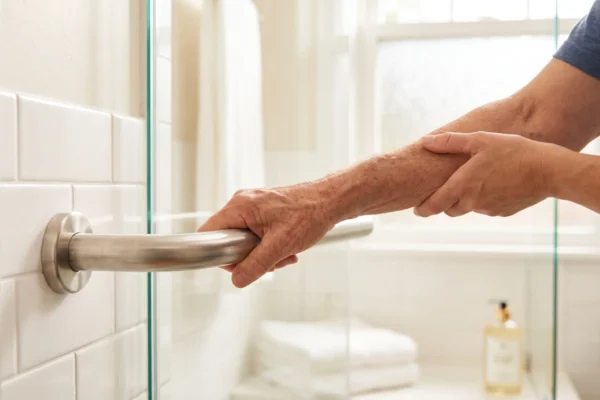
Loose rugs go, or get taped down. Cords move behind furniture. Spills get wiped straight away. Night lights go in the bedroom, hallway, and bathroom. Nonslip mats go in the tub and shower, and grab bars get screwed into the wall framing rather than stuck to tile.
Stairs need a rail on both sides and a light at the top and bottom. The kitchen needs daily items at waist height so nobody reaches above their head. A charged phone or an alert button should stay within reach, including at night.
If the changes keep piling up and someone still needs eyes on them most of the day, that is worth discussing honestly as a family rather than pushing it off. The signs that more support is needed usually show up long before anyone says the word out loud.
What Is the Next Step After a Fall?
That visit works best when it covers everything at once rather than one piece at a time. Medicines, blood pressure sitting and standing, legs and balance, eyesight, and the rooms your parents actually moved through. You can book a home visit with Dr. Cook if having that look happen where the fall did would be easier for your family.
One fall does not decide what comes next. It gives you a short list of things to check, and most items on that list have a practical answer: a dose adjusted, a rail added, a pair of shoes replaced, a few minutes of balance work each day. Start with whichever one you can do this week.
Sources Used
- Common Injuries as We Age – Centers for Disease Control and Prevention (2026)
- Dehydration Symptoms in Seniors: More Than Just Thirst – Dr. Rebecca Cook M.D.
- Easy, Secure, and Convenient Care Starts Here – Dr. Rebecca Cook M.D.
- Facts About Older Adult Falls – Centers for Disease Control and Prevention (2026)
- Fall Prevention: Balance and Strength Exercises for Older Adults – Johns Hopkins Medicine (2024)
- Fall prevention: Simple tips to prevent falls – Mayo Clinic (2026)
- Polypharmacy in Older Adults: When Too Many Medications Becomes a Risk – Dr. Rebecca Cook M.D. (2026)
- Subdural Hematoma: What It Is, Causes, Symptoms & Treatment – Cleveland Clinic (2024)
- Vision Changes After 60: What an Eyesight Exam Can Show – Dr. Rebecca Cook M.D.
- When Is a Bump on the Head Serious? – Cleveland Clinic (2024)
- When Is It Time for Assisted Living? Signs Families Shouldn’t Ignore – Dr. Rebecca Cook M.D.
Frequently Asked Questions
Should we tell the doctor about a fall even if nothing hurts?
Yes, and it is worth doing within a few days. The fall itself is information, and a painless fall still points at balance, blood pressure, or medicines. It also puts the event in their chart, which matters if there is another one.
What should we write down right after a fall?
The time of day, what they were doing, whether they felt dizzy or faint beforehand, whether the head hit anything, and what hurt afterward. Add when they last ate, drank, and took their medicines. Five lines on a phone is plenty.
Who can test an older adult’s balance?
A primary care doctor can do the basic screening in a regular visit. A physical therapist goes further, measuring strength and gait and building an exercise plan. Both can be arranged without a hospital trip.
Do suction-cup grab bars work as well as bars screwed into the wall?
No. Suction bars can come loose on wet or textured tile, and they are meant only for light steadying. Anything someone puts real weight on should be anchored into the wall framing by someone who knows how to find it.
Is an alert button worth it for a parent who lives alone?
For many families, yes, because the danger after a fall is often the hours spent on the floor rather than the fall itself. A pendant, bracelet, or smartwatch with a fall feature all work. It only helps if they wear it at night too.
Does using a walker make someone weaker over time?
Not when it fits and they use it properly, and it usually lets people walk more rather than less. A walker set at the wrong height, or borrowed from a friend, causes its own stumbles. Have a therapist size it and show them how.