Home healthcare coordination in Arizona is the synchronized delivery of medical services – including mobile lab services, portable imaging, and pharmacy logistics – directly to a patient’s residence. This model allows seniors in Phoenix and Scottsdale to receive many of the diagnostic services traditionally requiring a hospital visit within their own homes. By integrating these services into a single care plan, patients avoid the physical stress of travel and reduce their exposure to clinical infections.
Dr. Rebecca Cook is a specialist in geriatrics and internal medicine who focuses on creating these integrated, home-based care plans for residents in the Phoenix metropolitan area. Her approach prioritizes the specific health needs of patients aged 65 and older, ensuring all diagnostic and therapeutic elements are tailored for safety and independence.
Understanding Home Healthcare Coordination in Arizona
The primary goal of home healthcare coordination in Arizona is to create a seamless link between the physician, the diagnostic teams, and the pharmacy. When these entities communicate effectively, the risk of medical errors decreases, and the speed of treatment increases. This is particularly vital for the aging population in Phoenix and Scottsdale, where mobility and environmental heat can make traditional clinic visits hazardous.
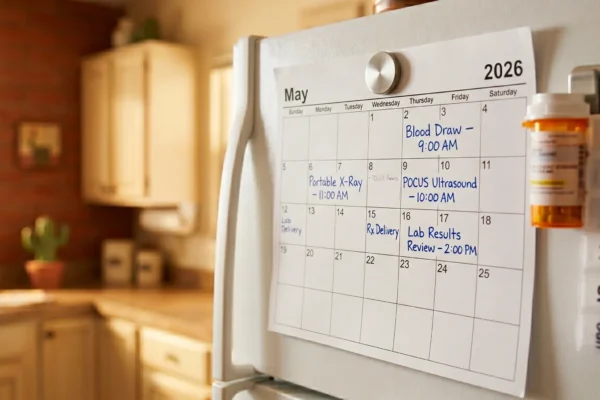
The Role of Mobile Lab Services in Modern Senior Care
Benefits of Mobile Phlebotomy in Arizona
Furthermore, mobile lab services in Arizona utilize sophisticated logistics to ensure that all samples are handled according to strict clinical protocols. Once the sample is collected, it is transported to a certified laboratory for rapid processing. This allows physicians to receive high-precision data quickly, which is critical for making informed decisions regarding a patient’s medication or treatment plan.
Advanced Diagnostics: Portable X-ray and At-Home Ultrasound in AZ
The Impact of POCUS on Immediate Patient Care
Portable x-ray Arizona services are equally important for patients with limited mobility. When a patient experiences a fall or sudden chest pain, moving them to a traditional radiology department can cause further pain and physical trauma. In-home imaging services AZ provide a dignified alternative, where the diagnostic equipment is brought to the patient, ensuring their comfort while providing the necessary medical data.
Optimizing Medication Safety Through Coordinated Pharmacy Logistics
The 4Ms Framework and Medication Management
- What Matters: Aligning care with the patient’s personal health goals.
- Medication: Ensuring that every drug is necessary and safe.
- Mentation: Monitoring mental health and cognitive function.
- Mobility: Helping patients maintain their ability to move safely.
By focusing on “Medication” within this framework, healthcare coordinators work to eliminate polypharmacy, which is the use of multiple medications that may interact poorly or be unnecessary. This specialized oversight is crucial for preventing adverse drug reactions, which are a leading cause of hospitalizations among seniors.
Safety Protocols: The 7 Rights of Medication Administration
- Right Patient: Verifying identity before administration.
- Right Drug: Confirming the medication matches the physician’s order.
- Right Dose: Ensuring the exact amount is provided.
- Right Route: Administering the medication correctly (e.g., oral vs. topical).
- Right Time: Maintaining the precise schedule for efficacy.
- Right Documentation: Recording every dose given for the medical record.
- Right Reason: Confirming the medication is being used for its intended purpose.
Why Phoenix and Scottsdale Residents Prefer In-Home Services
Additionally, the suburban layout of the Phoenix metropolitan area often requires long drives to reach specialized medical facilities. Mobile phlebotomy Arizona and in-home imaging services AZ remove the burden of navigating traffic and large parking lots. This allows seniors to conserve their energy for recovery and daily activities rather than spending it on the logistics of medical travel.
Comparison: Coordinated Home Care vs. Traditional Clinic Visits
| Feature | Coordinated Home Care | Traditional Clinic Visits |
|---|---|---|
| Location of Service | Patient’s Home | Medical Office or Hospital |
| Travel Requirements | None | Significant (Driving and Walking) |
| Exposure to Illness | Minimal | Higher in Public Waiting Areas |
| Diagnostic Speed | Real-time (POCUS/X-ray) | Dependent on Facility Schedule |
| Patient Environment | Comfortable and Familiar | Clinical and Often Stressful |
Steps to Implementing a Coordinated Care Plan
- Assessment: A physician evaluates the patient’s home environment and medical needs.
- Synchronization: The doctor coordinates with mobile lab services Arizona and imaging providers.
- Medication Review: The team analyzes all current prescriptions to ensure safety and necessity.
- Logistics Setup: Prescription delivery Arizona is arranged to ensure consistent access to treatments.
- Ongoing Monitoring: Regular mobile phlebotomy and check-ins maintain the health plan’s efficacy.
Frequently Asked Questions
What types of imaging can be done at home?
How do I get my blood drawn without going to a lab?
Are these services available in Scottsdale?
Does coordinated care help with many medications?
Can a doctor see the results of my home x-ray immediately?
The information provided in this article is for educational and informational purposes only and is not intended as medical advice, diagnosis, or treatment.